
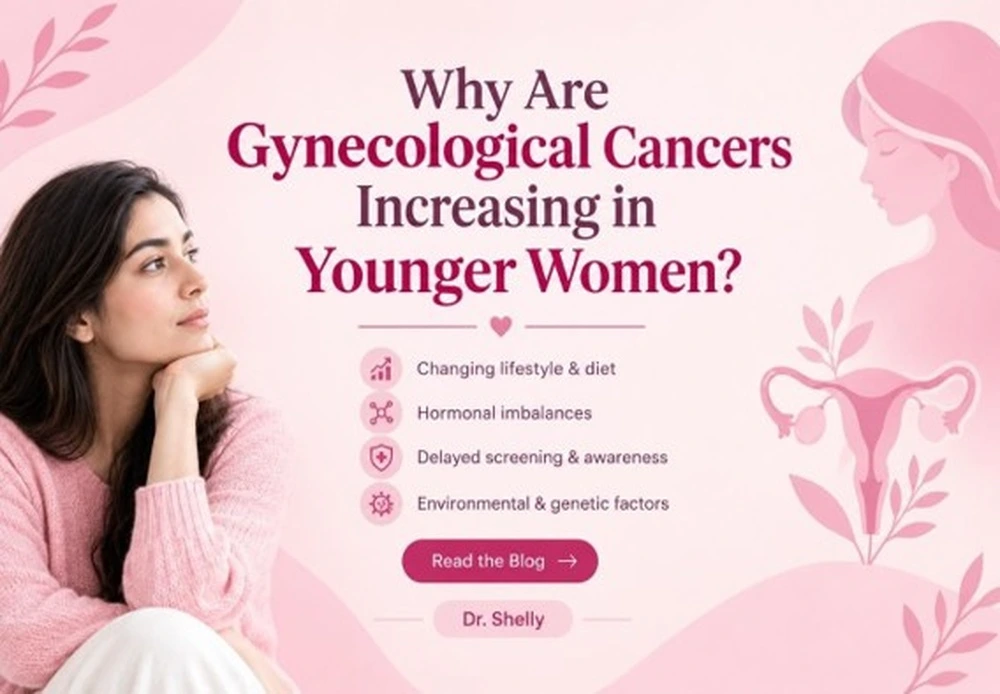
Why Are Gynecological Cancers Increasing in Younger Women?
Imagine a woman in her early 30s who suddenly starts having much heavier periods than usual. She also notices some pain in her lower abdomen and feels tired more often. She is young, has always been healthy, and has a busy life. So, like many women, she thinks it may be stress, a hormonal change or simply a bad month.
She waits to see if it gets better. But the symptoms continue.
This is where paying attention to your body matters. Gynecological Cancer is not something most young women expect to hear about, but age alone does not completely protect a woman from cancer. At the same time, symptoms such as heavy periods or pelvic pain do not mean that a woman has cancer. They can happen because of fibroids, PCOS, endometriosis, infections and many other common conditions.
The important thing is not to panic. It is to find out what is causing the change.
Having spent more than 20 years caring for women, Dr. Shelly Singh has seen how important it is for women to understand their bodies and not ignore changes that do not feel normal. Her approach is simple—listen to the patient, understand her health history and then decide what needs to be checked.
Is Gynecological Cancer Increasing in Younger Women?
There is no simple yes-or-no answer to this question.
Gynecological Cancer covers several different cancers, including those of the cervix, uterus, ovaries, vagina and vulva. Each one has different causes, risk factors and age patterns.
Some are still much more common in older women. However, doctors are paying more attention to cases and risk factors in younger women too.
This does not mean that every young woman with an irregular period needs to worry about cancer. It simply means that unusual symptoms should not always be brushed aside because someone is young.
What Could Be Behind the Changing Risk?
There is no single reason why a woman develops Gynecological Cancer. In many cases, several factors may play a role.
HPV and Cervical Cancer
HPV, or human papillomavirus, is one of the main risk factors for cervical cancer. Most HPV infections do not lead to cancer, but some high-risk HPV infections can stay in the body for a long time and cause changes in cervical cells.
Women can talk to their doctor about:
- HPV vaccination
- Regular cervical screening
- Following up if a screening test is abnormal
- Sexual health and ways to reduce HPV-related risk
Lifestyle and Weight
Our lifestyles have changed a lot. Many people spend most of the day sitting, exercise less and struggle with weight, sleep and eating habits.
Being overweight is linked with a higher risk of some cancers, including endometrial cancer. This does not mean that lifestyle directly causes cancer, but looking after your weight, activity levels and overall health can still be helpful.
Hormonal Changes
Hormones have an important role in women’s health. Problems that affect ovulation, periods or hormone levels may be linked with the risk of certain gynaecological cancers.
This is also why a major change in your periods should not always be put down to “hormones” without finding out why it is happening.
Family History
Sometimes, a woman’s risk has more to do with her family than her lifestyle.
If your mother, sister or another close relative has had ovarian, uterine or certain other cancers, tell your gynecologist. In some families, inherited gene changes can increase the risk of certain cancers.
Knowing your family history gives your doctor a better picture of your health.
Which Symptoms Should Younger Women Take Seriously?
Let’s go back to our example of the woman with heavy periods.
Her symptoms may have nothing to do with cancer. She may have fibroids or another common gynaecological problem. But getting checked is still the sensible thing to do.
Pay attention if you notice:
- Bleeding between periods
- Bleeding after sex
- Periods that suddenly become much heavier
- A major change in your usual menstrual pattern
- Bleeding after menopause
- Pelvic or lower abdominal pain that keeps coming back
- Unusual vaginal discharge
- Pain during sex
- Bloating or a feeling of fullness that does not go away
- Unexplained weight loss or tiredness
Having one of these symptoms does not mean you have Gynecological Cancer. But if a symptom keeps coming back, becomes worse or feels different from what is normal for you, speak to a gynecologist.
What Can Women Do to Protect Their Health?
You cannot prevent every case of Gynecological Cancer, but there are some simple things women can do.
- Keep up with the cervical screening recommended for your
- Ask your doctor whether HPV vaccination is suitable for
- Stay active and work towards a healthy
- Know what your normal periods look
- Keep track of changes that continue for more than one
- Tell your doctor about a strong family history of
- Avoid taking medicines repeatedly for unexplained symptoms without getting the cause
The idea is not to worry about cancer every time something feels different. It is simply about not ignoring a change that does not go away.
How Can Dr. Shelly Singh Help?
Sometimes, women delay seeing a doctor because they are unsure whether their symptoms are “serious enough.”
That is understandable.
But you do not have to wait until a problem becomes severe before asking for help.
Dr. Shelly Singh has more than two decades of experience in Obstetrics and Gynaecology and cares for women with a wide range of menstrual, reproductive and gynaecological concerns. She takes time to understand what a woman is experiencing rather than looking at one symptom in isolation.
If you are worried about abnormal bleeding, pelvic pain, changes in your periods or a family history of cancer, a consultation can help you understand what may be happening and whether you need further tests.
Frequently Asked Questions
Can young women get Gynecological Cancer?
Yes. Although many gynaecological cancers are more common as women get older, younger women can develop them too. The risk depends on the type of cancer and a woman’s health and family history.
Do heavy or irregular periods mean cancer?
Not usually. Heavy or irregular periods can happen because of fibroids, PCOS, hormonal changes, thyroid problems and other conditions. However, a sudden or ongoing change should be checked.
Can HPV cause cervical cancer?
Yes. Some high-risk types of HPV can cause changes in cervical cells that may eventually lead to cervical cancer if left untreated. HPV vaccination and regular screening can help lower the risk.
When should I see a gynecologist?
If you have bleeding that is unusual for you, ongoing pelvic pain, unusual discharge, changes in your periods or concerns because of your family history, it is worth speaking with a gynecologist.
Don't Ignore Changes in Your Body
Being young does not mean you should be frightened of Gynecological Cancer. But it also does not mean that unusual symptoms should always be ignored.
Most gynaecological symptoms have causes other than cancer. The only way to know what is happening is to get the right medical advice.
If you have noticed a change in your periods, unusual bleeding, pelvic pain or any other symptom that keeps coming back, book a consultation with Dr. Shelly Singh and get it checked rather than continuing to wait. Early attention can give you answers, peace of mind and, when needed, timely treatment.