Many women believe fertility challenges only occur later in life. However, a growing number of women under 30 are being diagnosed with a low egg count, a condition that can affect their ability to conceive naturally. While age remains one of the most important factors influencing fertility, ovarian reserve can decline earlier than expected in some women due to genetic, medical, lifestyle, or environmental factors.
Understanding the causes, symptoms, and available treatment options can help women take timely action and improve their chances of achieving a healthy pregnancy.
What Is Low Egg Count?
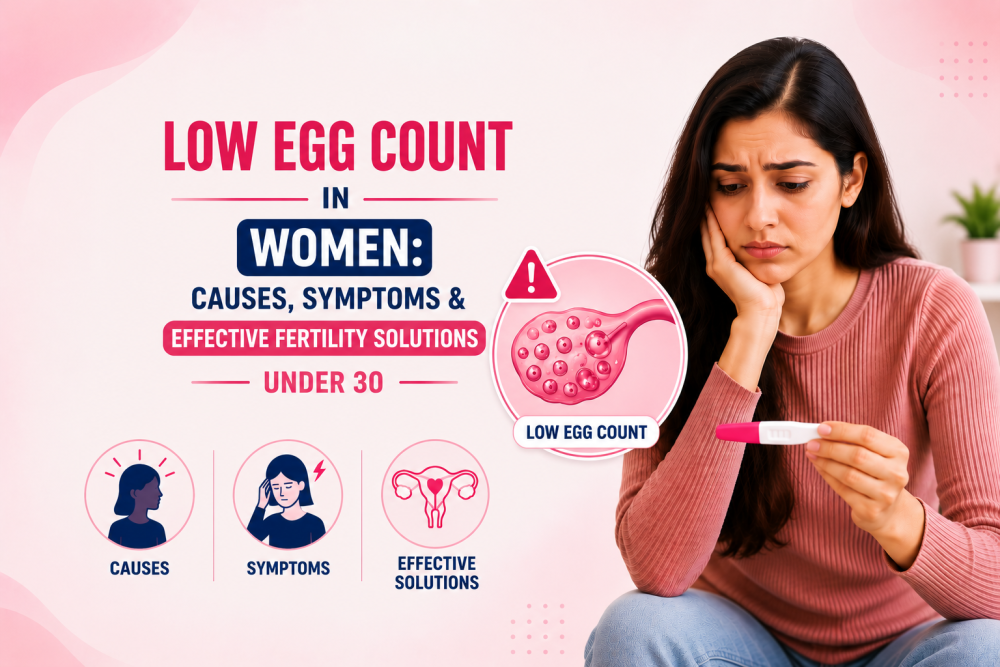
Low egg count, also known as diminished ovarian reserve (DOR), refers to a lower-than-expected number of eggs remaining in a woman’s ovaries for her age.
Every woman is born with a finite number of eggs. Over time, this number naturally decreases. However, in some women, the decline occurs faster than expected, even during their 20s.
A low egg count does not necessarily mean pregnancy is impossible. However, it may reduce fertility potential and can sometimes require medical intervention to improve conception chances.
How Common Is Low Egg Count in Women Under 30?
Although diminished ovarian reserve is more commonly associated with women over 35, fertility specialists are increasingly diagnosing younger women with reduced ovarian reserve.
Many women discover the condition only after experiencing:
- Difficulty conceiving
- Irregular menstrual cycles
- Recurrent pregnancy loss
- Fertility testing before marriage or family planning
Signs and Symptoms of Low Egg Count
Low egg count often develops silently without obvious symptoms. However, some women may experience:
Irregular Menstrual Cycles
Changes in cycle length or missed periods may indicate hormonal imbalances affecting ovarian function.
Difficulty Getting Pregnant
Inability to conceive after several months of trying may warrant fertility testing.
Poor Response to Fertility Treatments
Women undergoing fertility treatments may produce fewer eggs than expected.
Hormonal Symptoms
Some women may notice:
- Night sweats
- Mood changes
- Vaginal dryness
- Reduced libido
These symptoms can sometimes indicate declining ovarian function.
Causes of Low Egg Count in Women Under 30
Several factors can contribute to diminished ovarian reserve at a young age.
1. Genetic Factors
Genetics significantly influence ovarian reserve. Women with a family history of:
- Early menopause
- Premature ovarian insufficiency
- Fertility issues
may be at higher risk of developing low egg count earlier in life.
2. Autoimmune Disorders
Conditions such as:
- Thyroid disease
- Lupus
- Rheumatoid arthritis
can sometimes cause the immune system to attack ovarian tissue, reducing ovarian reserve.
3. Endometriosis
Endometriosis can damage ovarian tissue and affect egg quality and quantity, especially when ovarian cysts (endometriomas) are present.
4. Previous Ovarian Surgery
Surgical procedures involving the ovaries may unintentionally remove healthy ovarian tissue, reducing egg reserve.
5. Cancer Treatments
Chemotherapy and radiation therapy can significantly impact ovarian function and fertility.
6. Smoking and Lifestyle Factors
Smoking accelerates egg loss and negatively affects reproductive health. Other contributing factors may include:
- Excessive alcohol consumption
- Chronic stress
- Poor nutrition
- Exposure to environmental toxins
7. Premature Ovarian Insufficiency (POI)
POI occurs when ovarian function declines before age 40 and can sometimes begin in the 20s.
How Is Low Egg Count Diagnosed?
A fertility specialist may recommend several tests to evaluate ovarian reserve.
Anti-Müllerian Hormone (AMH) Test
AMH is considered one of the most reliable indicators of ovarian reserve. Lower AMH levels may suggest a reduced egg count.
Antral Follicle Count (AFC)
A transvaginal ultrasound measures the number of small follicles present in the ovaries.
Follicle-Stimulating Hormone (FSH) Test
Elevated FSH levels may indicate declining ovarian function.
Comprehensive Fertility Assessment
A complete fertility evaluation helps identify underlying causes and determine the most appropriate treatment plan.
Can Women Under 30 Get Pregnant with Low Egg Count?
Yes.
Many women with low egg count successfully conceive naturally or with fertility assistance. Egg quantity and egg quality are different factors. Younger women often have better egg quality, which can improve pregnancy outcomes despite a reduced ovarian reserve.
The key is timely diagnosis and appropriate fertility management.
Treatment Options for Low Egg Count
Treatment depends on age, fertility goals, ovarian reserve levels, and overall reproductive health.
Lifestyle Modifications
Healthy lifestyle habits may support reproductive health:
- Maintain a healthy weight
- Eat a balanced fertility-friendly diet
- Avoid smoking
- Limit alcohol intake
- Manage stress effectively
- Exercise regularly
While lifestyle changes cannot increase egg count, they may help optimize egg quality and overall fertility.
Fertility Medications
Ovulation-inducing medications may help improve reproductive outcomes in selected patients.
Egg Freezing
Women who are not ready to conceive but wish to preserve fertility may consider egg freezing.
Benefits include:
- Preserving younger eggs
- Future family planning flexibility
- Protection against further ovarian decline
Intrauterine Insemination (IUI)
IUI may be considered in specific cases where other fertility factors are favorable.
In Vitro Fertilization (IVF)
IVF is often recommended when ovarian reserve is significantly reduced.
Advantages include:
- Controlled ovarian stimulation
- Optimized egg retrieval
- Higher pregnancy rates in appropriate candidates
An experienced fertility specialist can determine whether IVF is the most suitable approach.
When Should You See a Fertility Specialist?
Women under 30 should consider consulting a fertility expert if they experience:
- Irregular periods
- Family history of early menopause
- Endometriosis
- Previous ovarian surgery
- Recurrent miscarriages
- Difficulty conceiving after 6–12 months of trying
- Low AMH test results
Early intervention often provides more treatment options and better fertility outcomes.
Expert Guidance from Dr. Shelly Singh
Fertility concerns can be emotionally overwhelming, especially for younger women who may not expect reproductive challenges at this stage of life.
Dr. Shelly Singh emphasizes a personalized, evidence-based approach to fertility care. Through advanced diagnostic testing, ovarian reserve assessment, fertility preservation strategies, and customized treatment plans, women can gain clarity about their reproductive health and make informed decisions about their future family goals.
How to Protect Your Fertility at a Young Age
Women can take proactive steps to safeguard fertility by:
- Scheduling fertility assessments when planning future pregnancies
- Avoiding smoking and tobacco products
- Maintaining a healthy lifestyle
- Managing chronic medical conditions
- Seeking early treatment for endometriosis and hormonal disorders
- Considering fertility preservation when medically indicated
Proactive fertility planning can significantly improve long-term reproductive outcomes.
Conclusion
A low egg count in women under 30 can be concerning, but it does not mean parenthood is out of reach. Advances in reproductive medicine have made it possible for many women with diminished ovarian reserve to conceive successfully.
Early diagnosis, expert fertility guidance, and individualized treatment planning are critical for achieving the best outcomes. If you are concerned about your fertility or have been diagnosed with a low egg count, consulting an experienced fertility specialist can help you understand your options and take the next step with confidence.
Book Your Fertility Consultation
If you are under 30 and concerned about your ovarian reserve, fertility potential, or future family planning goals, schedule a consultation with Dr. Shelly Singh. Early fertility assessment can provide valuable insights and help you make informed reproductive decisions.
Take control of your fertility journey today with expert guidance and personalized care.
Frequently Asked Questions (FAQs)
Can a woman under 30 have a low egg count?
Yes. Although uncommon, some women experience diminished ovarian reserve in their 20s due to genetics, autoimmune conditions, endometriosis, medical treatments, or other factors.
Can low egg count be reversed?
Currently, there is no proven method to increase the number of eggs in the ovaries. However, fertility treatments can help maximize the chances of conception using the available eggs.
What AMH level indicates a low egg count?
AMH levels vary by age and laboratory standards. A fertility specialist can accurately interpret your results and recommend appropriate next steps.
Can I get pregnant naturally with a low egg count?
Yes. Many younger women with low ovarian reserve conceive naturally, particularly if egg quality remains good.
Is IVF necessary for a low egg count?
Not always. Treatment depends on individual circumstances, age, ovarian reserve, and overall fertility health. Some women conceive naturally or with less invasive treatments.
Should I freeze my eggs if I have a low egg count?
Egg freezing may be recommended for women who are not ready to conceive but want to preserve future fertility. A fertility specialist can assess whether it is an appropriate option.
How often should ovarian reserve be tested?
Testing frequency depends on your fertility goals, age, and medical history. Your fertility specialist can advise on appropriate monitoring.