Date Archives October 2026

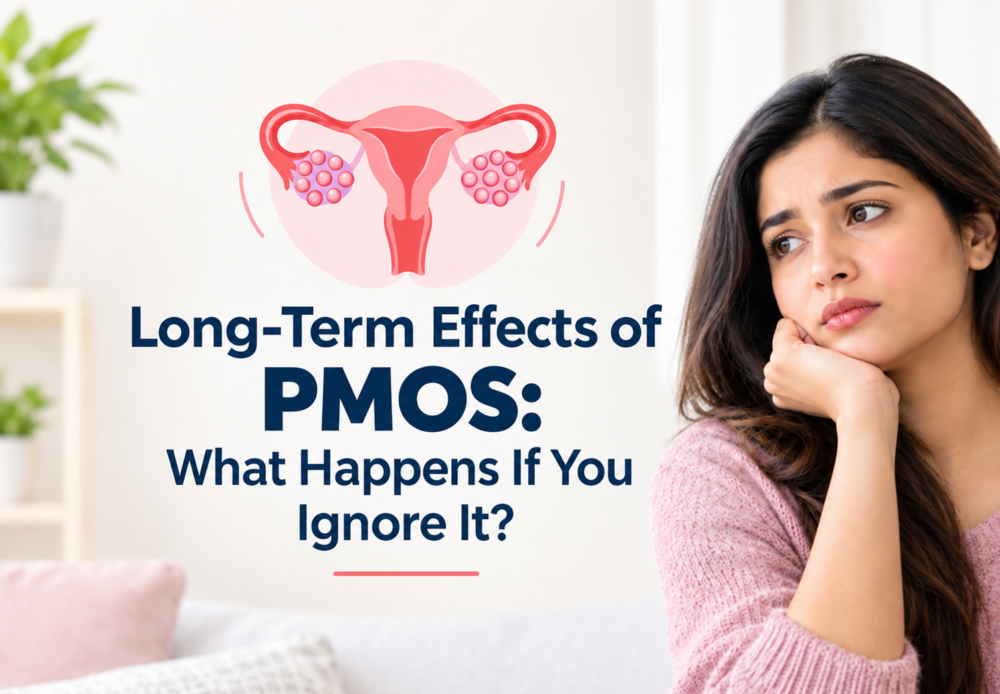
Long-Term Effects of PMOS: What Happens If It Is Not Treated?

Many women in their 20s and 30s notice irregular periods, acne and unexplained weight gain. Often they are told “it is just stress”, so they wait. But the long-term effects of PCOS can touch your fertility, your heart, your sugar levels and even your mood.

PCOS or PMOS, as it is now called, is a common hormonal condition, and its long-term effects should not be ignored.

Here we explain the long-term effects of PCOS (or PMOS, as it is now called) Β in simple words, so you know what to watch for.

What Is PCOS and How Do You Know You Have It?

PCOS, or polycystic ovary syndrome (now also called PMOS, polyendocrine metabolic ovarian syndrome), is a hormonal problem. The ovaries make more male hormones than they should, and this disturbs ovulation and periods. It is very common in women of reproductive age.

Common PCOS symptoms include:

  • Irregular, late or missed periods
  • Acne and oily skin
  • Extra hair on the face or belly, thinning hair on the scalp
  • Weight gain, mostly around the belly
  • Dark, velvety patches on the neck or underarms
  • Difficulty getting pregnant

See two or three of these signs?
Do not wait, because early action limits the long-term effects of PCOS. Our guide on irregular periods treatment explains your cycle.

7 Long-Term Effects of PCOS If It Stays Untreated

PCOS is not only about periods. Left untreated for years, these are the long-term effects of PCOS that doctors worry about most.

1. Trouble Getting Pregnant

Without regular ovulation, an egg is not released every month. That is why PCOS is a leading cause of ovulation-related infertility. Many women with PCOS can conceive with proper treatment. If you have been trying for a year, read what to do when you are trying to conceive for more than 1 year or visit our infertility care page.

2. Insulin Resistance and Type 2 Diabetes

Many women with PCOS have insulin resistance. The body makes insulin, but it does not work well. Over time, this can lead to prediabetes and type 2 diabetes. Dark patches on the neck are an early hint.

3. Heart Disease, High BP and High Cholesterol

PCOS is linked with high blood pressure, high cholesterol and extra belly fat. Together, these raise the risk of heart problems later in life. This is one of the most serious long-term effects of PCOS, and it can stay silent for years.

4. Thick Uterine Lining and Cancer Risk

When periods are rare, the lining of the uterus keeps building up. Over many years, this can cause endometrial hyperplasia and raise the risk of uterine cancer. Heavy, long or very irregular bleeding should always be checked.

5. Weight Gain, Fatty Liver and Sleep Apnoea

Weight gain worsens PCOS, and PCOS makes weight loss harder. It becomes a cycle. Over time, this can lead to fatty liver and sleep apnoea (loud snoring and tired mornings).

6. Anxiety, Depression and Low Confidence

Hormone changes, acne, hair growth and fertility worries can hurt your mental health. This is real and treatable, so please do not ignore it.

7. Pregnancy Complications

If you conceive with untreated PCOS, there is a higher chance of miscarriage, gestational diabetes, high blood pressure and early delivery. Planning before pregnancy lowers these risks. You can also read this research article on PCOS from the National Library of Medicine (PMC) for a deeper medical view.

How Is PCOS Usually Managed?

PCOS has no one-time cure, but it can be controlled well. The earlier you start, the milder the long-term effects of PCOS will be. Treatment depends on each woman’s age, symptoms and plans. It usually includes:

  • Proper diagnosis: history, ultrasound, and blood tests for hormones, sugar and cholesterol
  • Cycle control: medicines to bring regular periods and protect the uterine lining
  • Fertility support: ovulation treatment and guidance when you plan a baby
  • Weight and sugar plan: simple diet and exercise advice that fits your routine
  • Regular follow-ups: yearly checks for sugar, BP and cholesterol

Dr. Shelly Singh has over 25 years of experience in gynaecology and obstetrics. She completed her MBBS from MAMC and her MD (Gold Medalist) from LHMC, New Delhi. Read more about Dr. Shelly Singh or see our gynaecology services for PCOS care.

Simple Habits to Reduce the Long-Term Effects of PCOS

  • Walk or exercise for 30 minutes, at least 5 days a week
  • Eat more fibre, protein and home-cooked food; cut down sugary drinks and packaged snacks
  • Aim for a healthy weight; even a 5% weight loss can help your cycles
  • Sleep 7 to 8 hours a night

When Should You See a Gynaecologist for PCOS?

Book a visit if you have any of these:

  • No period for 3 months, or cycles longer than 35 days
  • Trying to conceive for a year without success
  • Sudden weight gain with acne, hair growth or dark patches

Feeling low or anxious for weeks

Unsure? Check these top signs you need to visit a gynaecologist.

FAQs on the Long-Term Effects of PCOS

What are the long-term effects of PCOS?

The long-term effects of PCOS include infertility, type 2 diabetes, heart disease, high blood pressure, a thick uterine lining with higher cancer risk, fatty liver, sleep apnoea and low mood. Early treatment lowers these risks.

Can PCOS be cured completely?

Not fully, but it can be managed well. With medicines, healthy habits and regular follow-ups, many women keep their symptoms under control and many can conceive.

Does untreated PCOS always cause infertility?

No. Many women with PCOS do conceive. But without treatment, ovulation stays irregular, so pregnancy can take longer.

Which doctor should I see for PCOS in Delhi?

A gynaecologist is the right doctor for PCOS. Always choose a registered doctor. Clinic details are given at the end of this article.

Is PCOS now called PMOS?

Yes. PCOS, or PMOS as it is now called, is the same condition. The new name reflects that it affects hormones and metabolism, not only the ovaries.

Conclusion: Why Timely Medical Advice Matters

The long-term effects of PCOS are real, but they are not your fate. Neha started treatment and made small changes to her routine. Within months her cycles became regular, and today she is planning her family with confidence.

See these signs in yourself? If you notice these signs, consult a registered gynaecologist for proper diagnosis and advice.

About Dr. Shelly Singh

Dr. Shelly Singh did her MBBS from MAMC and earned her MD in Obstetrics and Gynaecology, as a gold medalist, from LHMC, New Delhi. She is the Director of Obstetrics and Gynaecology at Fortis La Femme, GK 2.

Medical Credentials:

Qualifications: MBBS, MD (Obstetrics & Gynaecology)

Registration No: DMC 16544

Call or WhatsApp: 9811555446

  • Neeti Bagh Clinic: C-30, Near Ansal Plaza, New Delhi-110049 (every day, 4 PM to 6 PM)
  • Online: Contact us

Clinic location on Google Maps._

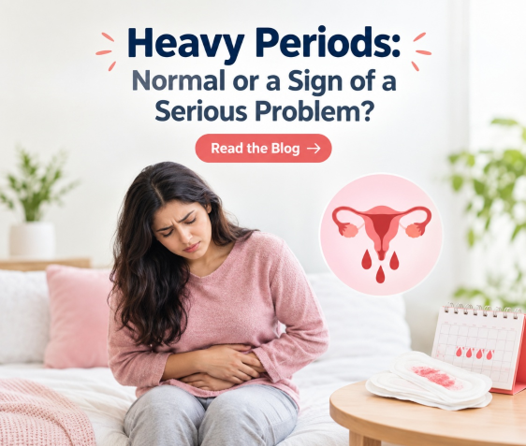
Heavy Periods: Normal or a Sign of a Serious Problem?

Soaking through pads quickly, keeping spare clothes in your bag, skipping work on day two of your period. Many women live like this for years because they are told, “This is normal. Every woman goes through it.”

But heavy periods are not always normal. Over time, heavy bleeding can cause low haemoglobin (anaemia), tiredness, breathlessness and hair fall. Sometimes it is also a sign of a problem in the womb, such as fibroids or polyps.

In this blog, you will learn what counts as heavy periods, the common causes, the warning signs, how doctors find the reason, and the treatment options.

What Counts as Heavy Periods?

A normal period lasts 3 to 7 days, and the cycle comes every 21 to 35 days. Doctors say you have heavy periods (also called heavy menstrual bleeding) when you notice these signs:

  • You soak a pad or tampon every 1 to 2 hours
  • Your bleeding lasts more than 7 days
  • You pass blood clots bigger than a coin
  • You wake up at night to change your pad
  • You use two pads together to feel safe
  • You feel weak, dizzy or breathless during your period

Are Heavy Periods Normal?

Sometimes, yes. Teenage girls and women close to menopause have uneven hormones, so a few heavy cycles can happen. But if it comes month after month and affects your work, sleep or mood, they are not normal. Your body is trying to tell you something.

Common Causes of Heavy Periods

These are the some of the common cause of heavy periods:

  • Fibroids: Non-cancerous lumps in the womb. They are a top reason for excessive period bleeding.
  • Polyps: Small growths in the womb lining.
  • PCOS and hormone imbalance: Irregular ovulation makes the womb lining thick, so bleeding turns heavy.
  • Adenomyosis and endometriosis: These often bring strong period pain too.
  • Thyroid problems: Low or high thyroid can change your flow.
  • Copper IUD or blood thinners: Both can increase bleeding.
  • Bleeding disorders: Some women are born with one and never know.
  • Womb lining problems: Rarely, a very thick lining or cancer is the cause. This is why early checking matters, especially after 40.

Warning Signs That Heavy Periods Need Attention

See a doctor soon if heavy bleeding comes with any of these:

  • Extreme tiredness, pale skin, fast heartbeat or fainting (signs of anaemia)
  • Bleeding between periods or after sex
  • Severe period pain that stops your daily work
  • Periods that suddenly turned heavy after age 40
  • Any bleeding after menopause

Go to a hospital at once if you soak a pad every hour for more than two hours, or feel like fainting.

How Doctors Find the Reason

  • Blood tests: to check haemoglobin, iron and thyroid
  • Pelvic ultrasound: to look for fibroids, polyps or cysts
  • Hysteroscopy: a thin camera to see inside the womb
  • Biopsy: a small sample of the lining, only when needed

Treatment for Heavy Periods: Your Options

Treatment depends on your age, the cause, and whether you plan a baby.

  • Medicines: tablets that reduce bleeding and pain, plus iron to fix anaemia
  • Hormonal care: pills or a or a hormonal IUD (LNG-IUS) can make periods lighter
  • Minor procedures: removal of polyps or small fibroids through a hysteroscope
  • Laparoscopic surgery: keyhole removal of fibroids or cysts with quicker recovery
  • Hysterectomy: only when other options fail

At home, eat iron-rich food like spinach, dates and jaggery with a source of vitamin C, and note your cycle dates and pad count in a diary.

Where to Get Heavy Periods Checked

Dr. Shelly Singh, MBBS, MD (Obstetrics and Gynaecology), Reg No. DMC 16544. For details of services, visit the Β gynaecology services :

  • PCOS and irregular periods care
  • Fibroid and endometriosis treatment
  • Laparoscopic and hysteroscopic surgery
  • Mirena and IUD insertion, with contraception counselling
  • Infertility treatment and pregnancy care

You can meet her at:

  • Fortis La Femme, Greater Kailash 2, New Delhi
  • Neeti Bagh Clinic, C-30, near Ansal Plaza, New Delhi – 110049 (every day, 4 PM to 6 PM)

Conclusion

Heavy periods are common, but never ignore them. If your periods affect your daily life or make you feel weak, get checked. Many causes of heavy periods can be managed with proper medical care. Treatment depends on the cause, so a proper check-up is important.

Worried About Heavy Periods? Clinic Details

If you have heavy periods that affect your daily life, consult a registered gynaecologist.

Call: 9811555446Β  |Β  Book an appointmentΒ  |Β  Clinic location on Google Maps

FAQs on Heavy Periods

How much bleeding is too much during periods?

If you soak a pad every 1 to 2 hours, bleed for more than 7 days, or pass big clots, it is too much. Please see a doctor.

Can heavy periods cause anaemia?

Yes. Losing a lot of blood every month lowers your iron and haemoglobin. This causes tiredness, dizziness and hair fall.

Are heavy periods a sign of PCOS or fibroids?

They can be. PCOS, fibroids, polyps and thyroid problems are common causes, and a simple ultrasound helps find the reason.

Do all heavy periods need surgery?

No. Many women improve with medicines or hormonal treatment. Surgery is advised only when a growth or other problem needs it.

When should I see a gynaecologist in South Delhi for heavy periods?

See one if your periods are heavy for more than two or three cycles, or if you feel weak or have pain. See a registered gynaecologist if your periods are heavy for more than two or three cycles, or if you feel weak or have pain.

HPV Vaccine for Women: Who Should Get It, When and Why It Matters

Priya, a 24-year-old working in Delhi, came to a gynaecologist with one worried question. Her cousin had just been told she needed treatment for cervical cell changes. Priya wanted to know if this could have been avoided. The honest answer was: very possibly, with a simple vaccine.

Many women hear about HPV only after a scary report. It does not have to be that way. HPV vaccination for women is one of the easiest ways to protect your health, and the best time to think about it is before any problem shows up.

In this guide, Dr. Shelly Singh, a gynaecologist in Delhi with over two decades of experience, explains who should get the vaccine, when to get it and why it matters.

What Is HPV and Why Should Women Care?

HPV stands for human papillomavirus. It is a very common virus that spreads through intimate skin-to-skin contact. Most people catch it at some point, and the body often clears it alone. But sometimes the virus stays for years, and that is when trouble starts. A long-lasting infection can lead to:

  • Cervical cancer, as almost all cases are linked to HPV
  • Cancers of the vagina and vulva
  • Genital warts
  • Abnormal cell changes on the cervix

The tricky part is that HPV usually shows no signs. You can carry it and feel perfectly fine. That is why prevention, like HPV vaccination for women, works better than waiting for symptoms.

HPV Vaccination for Women: Who Should Get It?

Doctors advise HPV vaccination for females in these groups:

  • Girls aged 9 to 14: This is the ideal age. The vaccine works best before any exposure to the virus.
  • Teens and young women up to 26: If you missed it earlier, you can still catch up.
  • HPV vaccine for unmarried women: Yes, it is safe and useful. The vaccine protects you from a virus. It has nothing to do with marital status.
  • HPV vaccination for sexually active women: You can still take it. You may have already been exposed to one HPV type, but the vaccine can still protect you from other types you have not been exposed to
  • HPV vaccination for adults: Women above 26 can also talk to their doctor about it.

HPV Vaccine Age Limit for Women

Many women ask if they are “too old” for HPV vaccination for women. There is no single answer, but this is a simple guide:

  • Best age: 9 to 14 years
  • Catch-up age: 15 to 26 years
  • HPV vaccine after 26: The benefit is smaller, as many women have already met the virus. Still, some women gain protection. Your gynaecologist can decide with you, based on your age, health and history.

HPV Vaccine Schedule for Women

For HPV vaccination for women, the number of doses depends on the age when you start:

  • Starting before age 15: 2 doses, usually 6 to 12 months apart
  • Starting at 15 or later: 3 doses over 6 months
  • Weak immunity: 3 doses at any age

The schedule can differ slightly between vaccine brands, so your doctor will confirm it for you. You can also read the CDC guide on HPV vaccines for more detail.

HPV Vaccine Benefits for Women

Here is what you gain from HPV vaccination for women:

  • Lower risk of cervical cancer later in life
  • Protection from genital warts (with some vaccines)
  • Fewer abnormal Pap smear reports and fewer follow-up procedures
  • Long-lasting protection, backed by years of research
  • Peace of mind for you and your family

One important point: the vaccine does not replace cervical screening. Even after vaccination, keep up with Pap smear or HPV tests as your doctor advises.

HPV Vaccine for Women in India

HPV vaccines are available in India, including a vaccine made in the country. Which one suits you depends on your age and what is available. Sadly, many women here still hear about HPV vaccination for women very late, or never. A short chat with your gynaecologist can clear the confusion.

You should wait or speak to your doctor first if you:

  • Are pregnant (the vaccine is usually delayed until after delivery)
  • Have a moderate or severe illness right now
  • Had a serious allergic reaction to a vaccine earlier

Side effects of HPV vaccination for women are mostly mild, like a sore arm, slight fever or feeling dizzy for a short while.

HPV Vaccine Consultation

Dr. Shelly Singh did her MBBS from MAMC and earned her MD in Obstetrics and Gynaecology, as a gold medalist, from LHMC, New Delhi. She is the Senior Director of Obstetrics and Gynaecology at Fortis La Femme, GK 2, and her gynaecology care includes HPV vaccination for women. You can read more about Dr. Shelly Singh on her website.

During your HPV vaccine consultation, you can expect:

  • A calm talk about your age, health and medical history
  • Advice on the right vaccine and dose schedule
  • Clear answers to every question, with no judgement

Where to meet her in Delhi:

  • Fortis La Femme, Greater Kailash 2, New Delhi
  • Neeti Bagh Clinic, C-30, near Ansal Plaza, New Delhi-110049 (every day, 4 PM to 6 PM)

Frequently Asked Questions

Is HPV vaccination for women safe?

Yes. HPV vaccines have been used worldwide for many years and have a strong safety record. Mild soreness at the injection site is the most common side effect.

Can I take the HPV vaccine if I am already married?

Yes. HPV vaccination for women is not only for young or unmarried women. Your doctor will check your age and history and tell you how much benefit to expect.

Does the vaccine treat an HPV infection I already have?

No. It prevents new infections from the types it covers. It does not cure an existing infection, so regular screening still matters.

Can I get the vaccine during pregnancy?

It is usually not advised during pregnancy. Doctors normally wait until after delivery. Tell your doctor if you are planning a baby.

How do I book an HPV vaccine consultation in Delhi?

Call 9811555446 or use the appointment form on the website. You can also check the FAQ page for common queries.

Conclusion: Protect Yourself Before a Problem Starts

Priya did not wait. She had her first dose within a month of that visit, and she convinced her younger sister to go too. That is the real power of HPV vaccination for women: one small step today can protect you for years.

Whether you are 14, 24 or 34, a quick talk with a doctor will tell you if HPV vaccination for women is right for you. Explore more women’s health tips on our blog.Β 

About Dr. Shelly Singh

Dr. Shelly Singh did her MBBS from MAMC and earned her MD in Obstetrics and Gynaecology, as a gold medalist, from LHMC, New Delhi. She is the Director of Obstetrics and Gynaecology at Fortis La Femme, GK 2.

Medical Credentials:

Qualifications: MBBS, MD (Obstetrics & Gynaecology)
Registration No: DMC 16544

Where to meet her in Delhi:

Neeti Bagh Clinic, C-30, near Ansal Plaza, New Delhi-110049 (every day, 4 PM to 6 PM

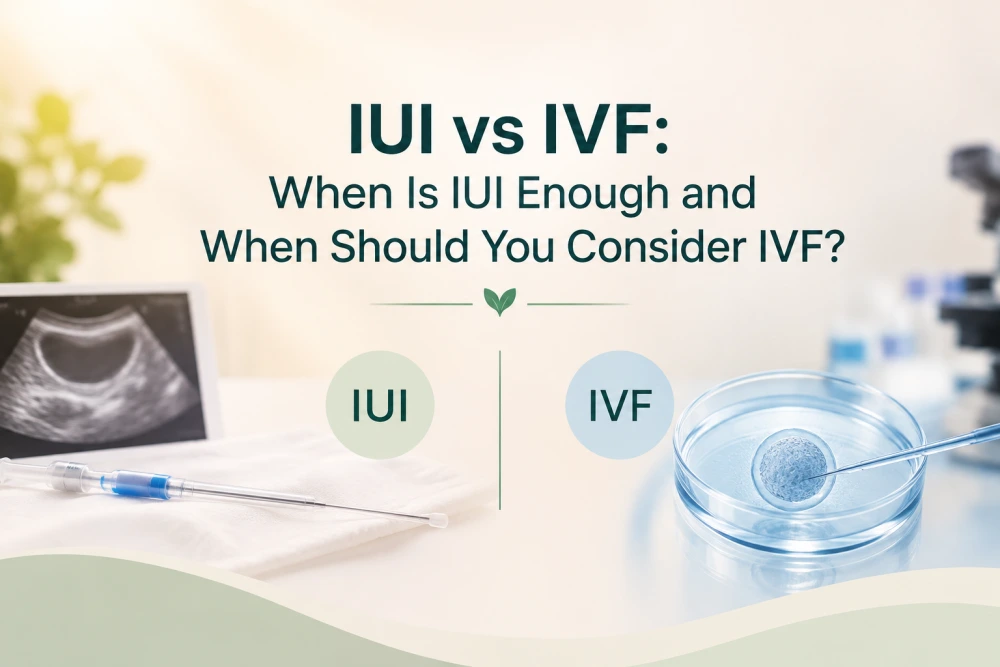
IUI vs IVF: When Is IUI Enough and When Should You Consider IVF?

Written by Dr. Shelly Singh, Obstetrician and Gynaecologist, New Delhi

Qualifications: MBBS, MD (Obstetrics & Gynaecology)

Registration: Β DMC 16544

Couples who find it hard to conceive soon hear two terms again and again: IUI and IVF. IUI vs IVF is one of the most common questions in gynaecology clinics across India, and the answer is rarely the same for two couples.

This article explains IUI vs IVF in simple words, using the ICMR Standard Treatment Workflow for female infertility as the main reference. It is general information, not a substitute for a doctor’s opinion or a personal medical evaluation.

When Is a Couple Called Infertile?

What ICMR Says About Infertility

Before comparing IUI vs IVF, it helps to know when treatment is even needed. As per ICMR:

  • Infertility means no pregnancy after 12 months of regular unprotected sex in women below 35 years, or after 6 months in women above 35.
  • It affects up to 15% of couples.

Who Should Get Tested Early?

  • Women above 35 should be tested sooner, and women above 40 immediately.
  • Early tests are also advised with irregular periods, tubal or uterine problems, endometriosis, past pelvic surgery, or a known male factor.

What Is the Difference Between IUI and IVF?

What Is the Difference Between IUI and IVF?

IUI (Intrauterine Insemination) is a simple procedure. Sperm is washed in aa lab and placed inside the uterus around the time of ovulation. Fertilisation then happens naturally inside the body. ICMR groups it as Level 1 ART.

What Is IVF?

In IVF (In Vitro Fertilisation), eggs are collected from the ovaries and joined with sperm in a lab. The embryo is then placed in the uterus. ICMR groups it as Level 2 ART.

Key Differences at a Glance

Here is the difference between IUI and IVF in plain terms:

  • Medicines: IUI needs mild stimulation tablets or injections, or none. IVF needs stronger injections.
  • Procedure: IUI is done in the clinic and takes a few minutes. IVF needs egg collection under sedation.
  • Cost and time: IUI costs less and takes one cycle. IVF needs more visits and a higher budget.

IUI vs IVF: Which Is Better?

Many people ask, β€œIUI vs IVF which is better?” Neither is better for everyone. In general, IVF has a higher success rate per cycle, but it is heavier on the body and budget. IUI is gentler and is usually considered when the cause is mild.

ICMR asks doctors to follow evidence-based, individual treatment and reminds them that the age of the woman is the most important factor. So in IUI vs IVF, the suitable option is the one that matches your tubes, ovulation, ovarian reserve, sperm report and age.

When Is IUI Enough?

Conditions Where IUI Works Well

As per the ICMR workflow, ovarian stimulation with IUI for 3 to 6 cycles is the usual first step when:

  • The fallopian tubes are open (confirmed by HSG or laparoscopy)
  • Ovulation is documented
  • Antral follicle count is 5 or more
  • AMH is 1.2 ng/ml or more

IUI in PCOS and Tubal Problems

For women who do not ovulate regularly, as in PCOS, ICMR suggests ovulation induction with or without IUI for 3 to 6 cycles. If a damaged, fluid-filled tube (hydrosalpinx) is removed or clipped and the other tube is open, IUI can still be tried.

When to Choose IVF Over IUI

When ICMR Points Towards IVF

In the IUI vs IVF decision, ICMR points towards IVF or ICSI in these situations:

  • Both fallopian tubes are blocked, or both have been removed or clipped
  • Poor ovarian reserve (antral follicle count below 5 or AMH below 1.2 ng/ml)
  • 3 to 6 IUI cycles have been completed without pregnancy
  • Uterine problems that surgery cannot correct
  • Age-related decline in fertility

Other Reasons Doctors May Suggest IVF Sooner

Endometriosis, very low sperm count and the need for embryo genetic testing as reasons doctors may suggest IVF earlier. You can read more in this research paper on PubMed.

IUI vs IVF Success Rate: What Affects It?

Factors That Affect Results

People often search for one number for the IUI vs IVF success rate, but no single figure applies to every couple. In general, IVF has a higher success rate per cycle, while IUI results depend on the cause of infertility and whether stimulation medicines are used. These factors matter most:

  • Age of the woman (the most important factor, as per ICMR)
  • Egg and sperm quality
  • Cause of infertility
  • Number of cycles already tried
  • Quality of the clinic and lab

Risks and Practical Points

  • IUI: mild cramps are common, and stimulation can raise the chance of twins.
  • IVF: needs daily injections and sedation for egg collection, with a small risk of ovarian overstimulation.
  • Both: cost and emotional stress are real, so plan ahead.

Tests That Decide IUI or IVF for Infertility Treatment

Essential Tests

The choice of IUI or IVF for infertility treatment should never be made without basic tests. ICMR lists these as essential:

  • Transvaginal ultrasound to check the uterus, ovaries and antral follicle count (day 2 to 5 of the cycle)
  • HSG to check whether the tubes are open
  • Semen analysis for the male partner

Extra Tests Doctors May Add

Depending on the case, doctors may also add AMH, thyroid (TSH), prolactin, FSH and LH, and viral markers. ICMR also expects the treatment plan, cost and consent to be discussed before treatment starts. Conditions like PCOS and endometriosis may need treatment first.

Conclusion: IUI vs IVF Depends on Your Reports

IUI vs IVF is not about choosing the stronger treatment. It is about choosing the one that fits your situation, as decided with your doctor:

  • Open tubes, normal ovulation and good ovarian reserve: ICMR suggests IUI for 3 to 6 cycles as the usual start.
  • Blocked tubes, poor ovarian reserve or failed IUI cycles: ICMR points towards IVF or ICSI.
  • Age above 35: ICMR advises earlier testing.

Frequently Asked Questions About IUI vs IVF

IUI vs IVF: which is better as the first treatment?

It depends on the reports. With open tubes, documented ovulation and fine ovarian reserve, ICMR suggests IUI first. ICMR points towards IVF when both tubes are blocked or ovarian reserve is poor.

How many IUI cycles should be tried before IVF?

The ICMR workflow mentions 3 to 6 cycles. If these fail, ICMR points towards IVF or ICSI next.

When should we start infertility tests?

After 12 months of trying if the woman is below 35, and after 6 months if she is above 35.

Can IUI work if one fallopian tube is damaged?

It can, if the other tube is open. ICMR advises removing or clipping a fluid-filled damaged tube first. If both tubes are blocked, ICMR points towards IVF.

Does age change the IUI vs IVF decision?

Yes. ICMR calls the age of the woman the most important prognostic factor, so decisions are often faster after 35.

World Menopause Day: Breaking the Silence Around Menopause and Women’s Health

Menopause is a normal part of every woman’s life, yet many women in India go through it without proper information. Hot flushes, poor sleep, mood changes and body aches are often brushed off as stress or age. Because the topic is rarely discussed at home, symptoms stay hidden and treatable problems go unchecked.

This is why menopause awareness matters. World Menopause Day, observed every year on 18th October, is a chance to share clear facts. In this guide, Dr Shelly Singh, a gynaecologist in Delhi, explains what menopause is, which menopause symptoms to watch for, and how women can look after their health at this stage.

What Is Menopause? A Simple Explanation

Menopause is confirmed when periods have stopped for 12 months in a row. It is a natural stage of life, not an illness. According to the World Health Organization, it usually happens between 45 and 55 years of age. Good menopause awareness starts with knowing the three stages:

  • Perimenopause: periods turn irregular and symptoms begin
  • Menopause: no period for 12 months
  • Postmenopause: the years after, when long-term health needs more attention

World Menopause Day 2026: Why This Day Matters

The International Menopause Society marks World Menopause Day every 18 October to share correct information and build menopause awareness worldwide. The theme for World Menopause Day 2026 is Chronic Pain in Midlife. This matters because many women put up with joint and muscle pain, thinking it is only age, when hormone changes may be playing a part.

Common Menopause Symptoms Women Often Ignore

Menopause symptoms are different for every woman. Some feel very little, while others struggle daily. Watch out for these signs:

  • Hot flushes and night sweats
  • Irregular or skipped periods
  • Poor sleep and constant tiredness
  • Mood swings, anxiety or low mood
  • Vaginal dryness and discomfort
  • Frequent urine infections or urgency
  • Joint pain, muscle aches and stiffness
  • Brain fog and forgetfulness

Some of these signs also appear in thyroid problems or anaemia, so a proper check is better than guessing.

Why Menopause Awareness Is Important

Many women never get the chance to learn about menopause before it arrives. This is what low menopause awareness often leads to:

  • Women suffer quietly and feel alone
  • Treatable symptoms are brushed off as normal ageing
  • Bone and heart health changes go unchecked
  • Women try random home remedies or supplements without medical advice
  • Families misunderstand mood and sleep changes

Raising menopause awareness closes these gaps. When a woman knows what is happening in her body, she asks for help sooner.

Menopause and Women's Health: What Changes in the Body

Oestrogen levels fall during menopause, and this affects far more than periods:

  • Bones: faster bone loss and a higher risk of osteoporosis
  • Heart: cholesterol and blood pressure may rise
  • Vagina and bladder: dryness, discomfort and infections
  • Sleep and mood: broken sleep, worry and low mood
  • Weight: more fat around the waist

This is why menopause and women’s health must be discussed together, not as two separate topics.

How Menopause Is Diagnosed and Managed

Menopause Awareness also means knowing that menopause is usually identified from age, symptoms and period history, so many women do not need extensive testing. A doctor may still advise some checks to rule out other causes and to review long-term health:

  • A detailed history of periods, sleep, mood and general health
  • Physical examination and blood pressure check
  • Blood tests such as thyroid and haemoglobin, and hormone levels in some cases
  • Cholesterol and blood sugar checks to review heart health
  • Bone density scan for women at higher risk of bone loss
  • Routine cervical and breast screening as advised

Management depends on symptoms, age and medical history, and results differ from person to person. Common approaches include:

  • Lifestyle changes such as exercise, balanced food and regular sleep
  • Non-hormonal medicines for hot flushes or mood symptoms, when suitable
  • Vaginal moisturisers or local treatment for dryness
  • Calcium and vitamin D supplements, only when a doctor advises
  • Menopausal hormone therapy, which suits some women and not others and needs a doctor’s review of benefits and risks

Gynaecology is the branch of medicine that looks after these concerns across a woman’s life, which is why menopause and women’s health overlap so closely.

When Should You See a Gynaecologist?

Many women wait too long because they feel the problem is too small or too embarrassing. Please do not wait if you notice any of these:

  • Hot flushes or night sweats that disturb your sleep every week
  • Heavy, very frequent or painful periods in your forties
  • Any bleeding after periods have stopped for a full year
  • Mood changes, worry or low mood that affect work and family life
  • Pain during intimacy, or burning while passing urine

Early advice can save a lot of worry. It also helps women who have heard scary things about menopause from friends or social media. Real menopause awareness means replacing guesswork and fear with facts from a trained doctor.

Daily Habits That Support Women's Health After 45

Menopause Awareness also means knowing simple habits. They do not replace medical care, but they support the body through this change:

  • Move daily: brisk walking plus light strength exercise protects bones and muscles
  • Eat well: include milk products, dals, green vegetables, nuts and seeds for calcium and protein
  • Get sunlight: vitamin D helps bones, and many Indian women are low in it
  • Sleep on time: keep fixed sleep and wake timings, and keep the room cool

How Families Can Help Break the Silence

  • Listen without joking about mood swings
  • Share the household load so she can rest
  • Talk openly with daughters, so the next generation knows what to expect

Small, honest talks are how menopause awareness spreads, one home at a time.

FAQs on Menopause Awareness

1.Β  At what age does menopause start in India?

Most women reach menopause between 45 and 55 years. If periods stop before 40, it is worth seeing a doctor.

2. What are the first menopause symptoms?

Irregular periods, hot flushes, poor sleep and mood changes often come first.

3. Is menopause a disease?

No. It is a natural stage, but symptoms and long-term bone and heart risks may need medical care.

4. Why is menopause awareness important for younger women?

Knowing early helps them support their mothers and spot early menopause in themselves.

5. Is hormone therapy safe for everyone?

No. It suits some women and not others, so a doctor must decide after a full check. More answers are on the FAQ page.

Conclusion

Menopause is not something to hide or silently endure. World Menopause Day 2026 reminds us that open talk, correct information and timely medical advice make this phase easier. Menopause Awareness begins at home, with one honest conversation. A woman who understands menopause symptoms and looks after her bones, heart and mind can stay healthy. For national health information, see the Ministry of Health and Family Welfare.

This article was prepared on the guidance of Dr Shelly Singh, MBBS, MD (Obstetrics & Gynaecology), Senior Director at Fortis La Femme, Greater Kailash 2, South Delhi. More related reading is on the Dr Shelly Singh blog.

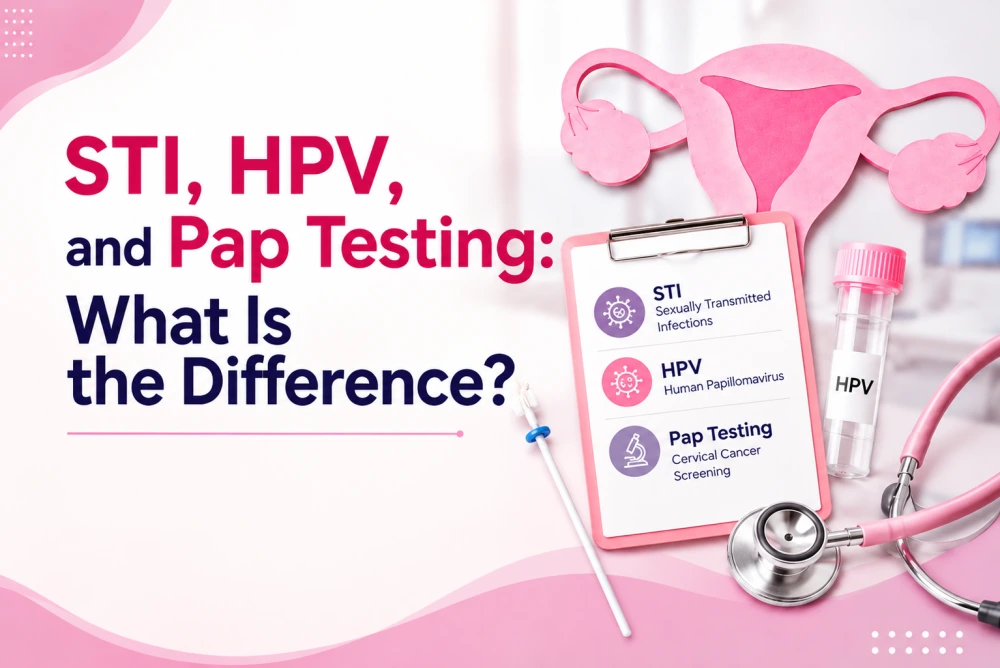
STI, HPV, and Pap Testing: What Is the Difference?

When Riya, a 32-year-old woman, visited her gynecologist for a routine check-up, she had one simple question: β€œIf I get a Pap smear, will it also tell me whether I have an STI or HPV?”

Note: This is a fictional example for illustration and is not based on any real patient.

It is a common question, and understandably so. Terms such as STI testing, HPV testing, and Pap smear are often mentioned together, which can make them seem like different names for the same test. In reality, each test has a different purpose.

Knowing the difference can help you make better decisions about your sexual, reproductive, and cervical health.

HPV vs Pap Smear: What Is the Difference?

The easiest way to understand HPV vs Pap smear is to remember what each test is looking for.

An HPV test checks for certain high-risk types of human papillomavirus that can cause changes in cervical cells and increase the risk of cervical cancer.

A Pap smear, also called a Pap test, examines cells collected from the cervix to identify abnormal or precancerous changes.

STI testing, on the other hand, is used to check for specific sexually transmitted infections such as chlamydia, gonorrhea, syphilis, or HIV, depending on which tests are recommended.

So, these tests are related to women’s health, but they are not interchangeable.

What Is an HPV Test?

Human papillomavirus, or HPV, is one of the most common sexually transmitted infections. Many people with HPV do not experience noticeable symptoms, and in many cases, the infection clears naturally.

The concern arises when certain high-risk HPV types persist in the body. Persistent infection can cause changes in cervical cells over time, which may eventually develop into cervical cancer if left undetected and untreated.

An HPV screening test is designed to identify high-risk HPV.

Depending on your age, screening history, previous results, and applicable medical guidelines, your doctor may recommend HPV testing as part of your cervical cancer screening plan.

One important point is that having HPV does not mean you have cancer. A positive HPV result simply means that further assessment or appropriate follow-up may be needed

What Does a Pap Smear Check?

A Pap smear focuses on the cells of the cervix, rather than directly looking for every infection.

During the test, a healthcare professional collects a small sample of cervical cells. These cells are then examined for abnormal changes.

A Pap smear can help identify:

  • Abnormal cervical cells
  • Precancerous changes
  • Cellular changes that may be associated with HPV
  • Changes that may require further evaluation

However, a Pap smear is not a general STI test.

This means that receiving a normal Pap smear result does not automatically confirm that you are free from sexually transmitted infections.

STI Test vs Pap Smear: Why Are They Not the Same?

Imagine someone has recently started a new relationship and wants to take care of her sexual health. She schedules a gynecological appointment and assumes that one Pap smear will check everything.

This is where confusion can occur.

An STI test vs Pap smear comparison becomes clearer when you consider their purpose. STI testing is performed to identify specific sexually transmitted infections, while a Pap smear evaluates cervical cells for abnormal changes.

For example, depending on your circumstances, an STI evaluation may involve tests for:

  • Chlamydia
  • Gonorrhea
  • Syphilis
  • HIV
  • Other infections based on symptoms or potential exposure

The exact tests required are not the same for every woman. Your sexual history, symptoms, pregnancy status, exposure risk, and medical history can influence what your doctor recommends.

Can You Need Both an HPV Test and a Pap Smear?

Yes.

Because HPV testing and Pap testing look at different things, they may both form part of a cervical screening approach when clinically appropriate.

For example, HPV testing may identify the presence of a high-risk HPV infection, while a Pap test can identify whether cervical cells have developed abnormal changes.

Your gynecologist may recommend:

  • HPV testing
  • Pap testing
  • Both tests together
  • Follow-up testing after an abnormal result

The recommended approach depends on your individual circumstances and current screening guidelines.

This is why following a personalised screening plan is more useful than assuming that one test can detect every possible problem.

When Should You Consider STI Testing?

STIs do not always cause obvious symptoms. Some people may have an infection without realising it.

You may need to discuss STI testing for women with a healthcare professional if you:

  • Have unusual vaginal discharge
  • Experience burning or pain while urinating
  • Notice genital sores or unusual lesions
  • Have pelvic discomfort
  • Have had unprotected sexual contact
  • Have a new sexual partner
  • Know that a partner has an STI
  • Are pregnant and require recommended infection screening
  • Have concerns about a possible exposure

Even when you feel completely healthy, testing may sometimes be appropriate depending on your circumstances.

HPV vs Pap Smear: Which Test Do You Need?

There is no single test that is right for every woman.

Your age, previous screening results, medical history, symptoms, sexual health, and risk factors all matter when deciding what type of screening or testing may be appropriate.

For instance, a woman with no symptoms coming for routine cervical screening may have different needs from someone who has symptoms or a previous abnormal cervical screening result.

If you have previously tested positive for high-risk HPV or received an abnormal Pap result, do not panic. An abnormal result does not automatically mean cancer. Your doctor can explain what the result means and whether additional testing or monitoring is necessary.

Frequently Asked Questions

Is an HPV test the same as a Pap smear?

No. An HPV test checks for high-risk HPV, while a Pap smear examines cervical cells for abnormal changes. They provide different information.

Does a Pap smear test for STIs?

No. A Pap smear is primarily used to identify abnormal cervical cell changes and is not a comprehensive STI test.

Is HPV considered an STI?

Yes. HPV is primarily transmitted through sexual contact and is considered a sexually transmitted infection. It is extremely common and may not cause noticeable symptoms.

Can you have HPV without knowing it?

Yes. HPV can be present without obvious symptoms. This is one reason appropriate cervical screening is important for eligible women.

Does a positive HPV test mean I have cervical cancer?

No. A positive high-risk HPV test does not mean that you have cervical cancer. It means that your healthcare professional may recommend appropriate follow-up based on your results and screening history.

Should I get an HPV test, Pap smear, or STI test?

The answer depends on your individual situation. A gynecologist can assess your age, symptoms, health history, previous results, and potential exposure before recommending the appropriate testing.

Conclusion

Understanding HPV vs Pap smear can make women’s health screening much less confusing. An HPV test looks for high-risk HPV, a Pap smear checks cervical cells for abnormal changes, while STI testing looks for specific sexually transmitted infections.

These tests have different purposes, and one should not automatically be considered a replacement for another.

If you are due for cervical screening, concerned about HPV, experiencing symptoms, or simply unsure which test you need, Dr. Shelly Singh can provide personalised gynecological guidance based on your individual health needs.

If you are unsure which test applies to you, discuss your age, symptoms and screening history with a registered medical practitioner.

About Dr. Shelly Singh

Dr. Shelly Singh did her MBBS from MAMC and earned her MD in Obstetrics and Gynaecology, as a gold medalist, from LHMC, New Delhi. She is the Senior Director of Obstetrics and Gynaecology at Fortis La Femme, GK 2.

Medical Credentials:

Qualifications: MBBS, MD (Obstetrics & Gynaecology)
Registration No: DMC 16544

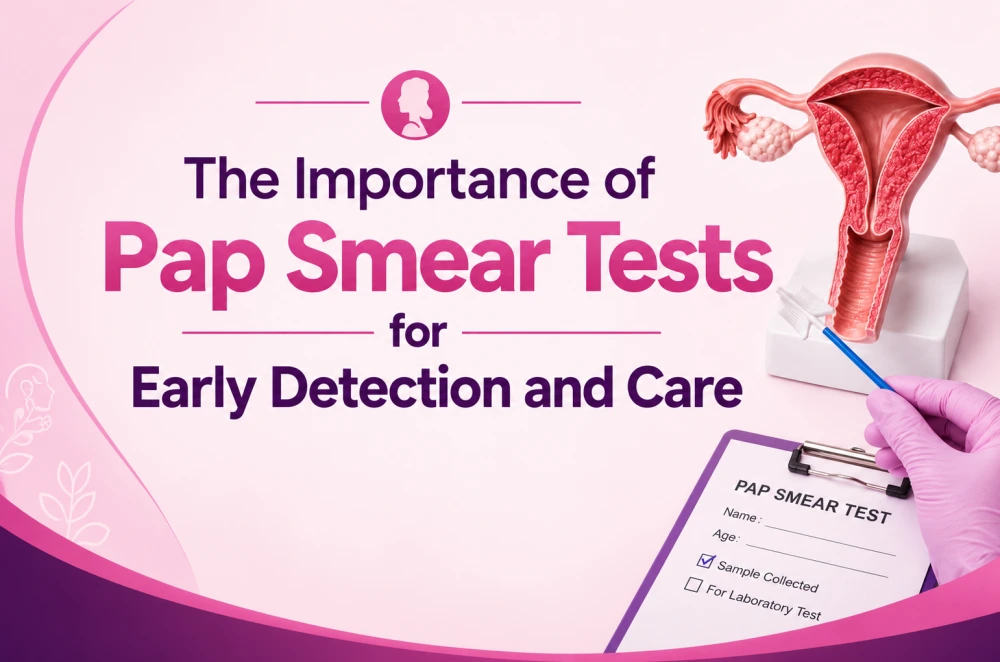
The Importance of Pap Smear Tests for Early Detection and Care

β€œDoctor, I feel completely fine. Do I really need a Pap smear?”

It is a question gynaecologists hear often.

A woman may have regular periods, no pelvic pain, no unusual discharge and no obvious health concerns. So, getting a test when nothing feels wrong can seem unnecessary.

But cervical health is one area where waiting for symptoms may not be the best approach.

Preventive screening is not about finding something to worry about. It is about finding changes early, when they can be monitored or treated before they become more serious.

That is why understanding the importance of a Pap smear test can be an important part of a woman’s long-term healthcare.Β 

What Is a Pap Smear Test?

A Pap smear, also called a Pap test, is a screening test used to look for abnormal changes in the cells of the cervix.

The cervix is the lower part of the uterus that connects to the vagina. Certain persistent infections, particularly those associated with high-risk types of human papillomavirus (HPV), can cause cellular changes over time.

A Pap smear can help identify abnormal cervical cells before they develop into cervical cancer.

This is what makes cervical cancer screening so valuableβ€”it focuses on prevention and early detection rather than waiting until a problem causes noticeable symptoms

Why Cervical Cancer Screening Matters

Think about screening like checking the brakes of your car before a long journey. You may not notice a problem while driving, but an inspection can identify an issue before it becomes dangerous.

Similarly, cervical cell changes may not cause symptoms in the early stages.

Regular screening can help:

  • Identify abnormal cervical cells early
  • Detect changes that may need monitoring or further evaluation
  • Support timely medical treatment when required
  • Reduce the risk of cervical cancer becoming advanced
  • Give women greater awareness of their cervical health

This is why a Pap smear test for women is considered an important preventive healthcare measure when recommended based on age and individual risk factors.

When Should You Get a Pap Smear?

One of the most common questions women ask is, β€œHow often should I get a Pap smear?”

There is no single schedule that is right for every woman. Screening recommendations can depend on age, previous test results, HPV status, medical history and other individual factors.

Some women may require routine screening at specific intervals, while others may need a different approach.

It is best to discuss your personal screening schedule with your gynaecologist rather than deciding based only on what a friend or family member follows.

Your healthcare needs are personalβ€”and your screening plan should be too.

What Happens During a Pap Smear Test?

Many women delay a Pap test because they are nervous about what will happen.

The procedure is generally brief.

During the examination, a speculum is gently placed in the vagina so the cervix can be seen. A small medical brush or similar instrument is then used to collect cervical cells. The sample is sent to a laboratory for examination.

You may experience some pressure or mild discomfort, but the test is usually completed within a few minutes.

If you are anxious about the procedure, tell your gynaecologist beforehand. Knowing what to expect can make the experience much easier.

Does a Pap Smear Detect Cervical Cancer?

A Pap smear primarily looks for abnormal cervical cell changes rather than simply diagnosing cancer.

Depending on your age, risk profile and local screening recommendations, your doctor may also discuss HPV testing or combined screening.

An abnormal result does not automatically mean you have cancer.

It may indicate cellular changes that need monitoring, repeat testing or additional evaluation. Your gynaecologist will interpret the result in the context of your overall health and medical history.

Who May Need Cervical Cancer Screening in Delhi?

Women who are eligible for cervical screening may benefit from staying up to date with their recommended tests, even when they feel healthy.

You should particularly discuss screening with a gynaecologist if:

  • You have never had cervical screening
  • You are unsure when your last Pap test was
  • You have previously had an abnormal cervical screening result
  • You have a history of HPV infection
  • You have concerns about cervical health
  • You have been advised to undergo additional follow-up

A consultation can help determine what screening or follow-up is appropriate for you.

Pap Smear Test in Delhi: Don't Wait for Symptoms

One of the biggest misconceptions about preventive healthcare is that a test is only necessary when something feels wrong.

In reality, screening is designed for people who may feel perfectly healthy.

A Pap smear test in Delhi can be a simple but meaningful step toward protecting your cervical health. It is not about creating fear. It is about giving yourself the opportunity to identify changes early and act when appropriate.

Frequently Asked Questions About Pap Smear Tests

1. Is a Pap smear painful?

Most women experience only mild pressure or brief discomfort during the test. If you feel anxious, discuss your concerns with your gynaecologist beforehand.

2. How long does a Pap smear take?

The actual sample collection usually takes only a few minutes as part of a gynaecological examination.

3. Can I have a Pap smear during my period?

Menstrual blood can sometimes affect the sample, so your doctor may recommend scheduling the test at another time.

4. Does an abnormal Pap smear mean cancer?

No. An abnormal result does not automatically mean cancer. It can indicate changes in cervical cells that may require monitoring or further evaluation.

5. How often should I have cervical cancer screening?

The recommended interval depends on factors such as your age, screening history, HPV status and individual risk. Your gynaecologist can advise you on an appropriate schedule.

Conclusion

A Pap smear may take only a few minutes, but its role in preventive women’s healthcare can be significant.

You do not need to wait for pain, unusual bleeding or other symptoms to start thinking about cervical health. Regular screening, appropriate follow-up and an open conversation with your gynaecologist can help you stay informed and proactive.

If you are due for screening or are unsure whether you need a Pap smear, discuss it with a registered medical practitioner.

About Dr. Shelly Singh

Dr. Shelly Singh did her MBBS from MAMC and earned her MD in Obstetrics and Gynaecology, as a gold medalist, from LHMC, New Delhi. She is the Senior Director of Obstetrics and Gynaecology at Fortis La Femme, GK 2.

Medical Credentials:

Qualifications: MBBS, MD (Obstetrics & Gynaecology)
Registration No: DMC 16544