STI, HPV, and Pap Testing: What Is the Difference?
When Riya, a 32-year-old woman, visited her gynecologist for a routine check-up, she had one simple question: “If I get a Pap smear, will it also tell me whether I have an STI or HPV?”

Note: This is a fictional example for illustration and is not based on any real patient.

It is a common question, and understandably so. Terms such as STI testing, HPV testing, and Pap smear are often mentioned together, which can make them seem like different names for the same test. In reality, each test has a different purpose.

Knowing the difference can help you make better decisions about your sexual, reproductive, and cervical health.

HPV vs Pap Smear: What Is the Difference?

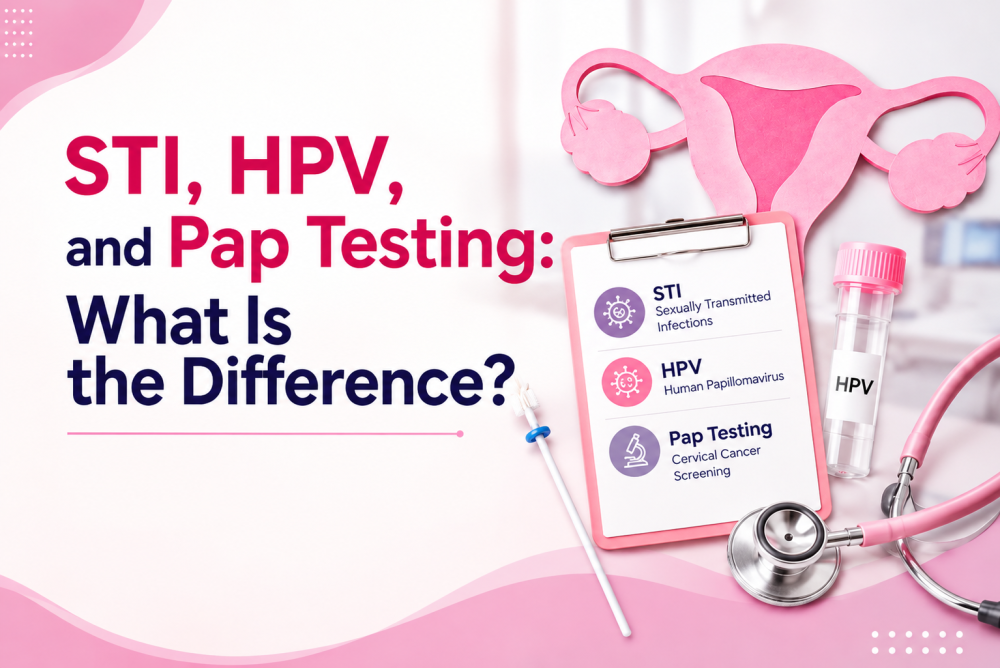
The easiest way to understand HPV vs Pap smear is to remember what each test is looking for.

An HPV test checks for certain high-risk types of human papillomavirus that can cause changes in cervical cells and increase the risk of cervical cancer.

A Pap smear, also called a Pap test, examines cells collected from the cervix to identify abnormal or precancerous changes.

STI testing, on the other hand, is used to check for specific sexually transmitted infections such as chlamydia, gonorrhea, syphilis, or HIV, depending on which tests are recommended.

So, these tests are related to women’s health, but they are not interchangeable.

What Is an HPV Test?

Human papillomavirus, or HPV, is one of the most common sexually transmitted infections. Many people with HPV do not experience noticeable symptoms, and in many cases, the infection clears naturally.

The concern arises when certain high-risk HPV types persist in the body. Persistent infection can cause changes in cervical cells over time, which may eventually develop into cervical cancer if left undetected and untreated.

An HPV screening test is designed to identify high-risk HPV.

Depending on your age, screening history, previous results, and applicable medical guidelines, your doctor may recommend HPV testing as part of your cervical cancer screening plan.

One important point is that having HPV does not mean you have cancer. A positive HPV result simply means that further assessment or appropriate follow-up may be needed

What Does a Pap Smear Check?

A Pap smear focuses on the cells of the cervix, rather than directly looking for every infection.

During the test, a healthcare professional collects a small sample of cervical cells. These cells are then examined for abnormal changes.

A Pap smear can help identify:

  • Abnormal cervical cells
  • Precancerous changes
  • Cellular changes that may be associated with HPV
  • Changes that may require further evaluation

However, a Pap smear is not a general STI test.

This means that receiving a normal Pap smear result does not automatically confirm that you are free from sexually transmitted infections.

STI Test vs Pap Smear: Why Are They Not the Same?

Imagine someone has recently started a new relationship and wants to take care of her sexual health. She schedules a gynecological appointment and assumes that one Pap smear will check everything.

This is where confusion can occur.

An STI test vs Pap smear comparison becomes clearer when you consider their purpose. STI testing is performed to identify specific sexually transmitted infections, while a Pap smear evaluates cervical cells for abnormal changes.

For example, depending on your circumstances, an STI evaluation may involve tests for:

  • Chlamydia
  • Gonorrhea
  • Syphilis
  • HIV
  • Other infections based on symptoms or potential exposure

The exact tests required are not the same for every woman. Your sexual history, symptoms, pregnancy status, exposure risk, and medical history can influence what your doctor recommends.

Can You Need Both an HPV Test and a Pap Smear?

Yes.

Because HPV testing and Pap testing look at different things, they may both form part of a cervical screening approach when clinically appropriate.

For example, HPV testing may identify the presence of a high-risk HPV infection, while a Pap test can identify whether cervical cells have developed abnormal changes.

Your gynecologist may recommend:

  • HPV testing
  • Pap testing
  • Both tests together
  • Follow-up testing after an abnormal result

The recommended approach depends on your individual circumstances and current screening guidelines.

This is why following a personalised screening plan is more useful than assuming that one test can detect every possible problem.

When Should You Consider STI Testing?

STIs do not always cause obvious symptoms. Some people may have an infection without realising it.

You may need to discuss STI testing for women with a healthcare professional if you:

  • Have unusual vaginal discharge
  • Experience burning or pain while urinating
  • Notice genital sores or unusual lesions
  • Have pelvic discomfort
  • Have had unprotected sexual contact
  • Have a new sexual partner
  • Know that a partner has an STI
  • Are pregnant and require recommended infection screening
  • Have concerns about a possible exposure

Even when you feel completely healthy, testing may sometimes be appropriate depending on your circumstances.

HPV vs Pap Smear: Which Test Do You Need?

There is no single test that is right for every woman.

Your age, previous screening results, medical history, symptoms, sexual health, and risk factors all matter when deciding what type of screening or testing may be appropriate.

For instance, a woman with no symptoms coming for routine cervical screening may have different needs from someone who has symptoms or a previous abnormal cervical screening result.

If you have previously tested positive for high-risk HPV or received an abnormal Pap result, do not panic. An abnormal result does not automatically mean cancer. Your doctor can explain what the result means and whether additional testing or monitoring is necessary.

Frequently Asked Questions

Is an HPV test the same as a Pap smear?

No. An HPV test checks for high-risk HPV, while a Pap smear examines cervical cells for abnormal changes. They provide different information.

Does a Pap smear test for STIs?

No. A Pap smear is primarily used to identify abnormal cervical cell changes and is not a comprehensive STI test.

Is HPV considered an STI?

Yes. HPV is primarily transmitted through sexual contact and is considered a sexually transmitted infection. It is extremely common and may not cause noticeable symptoms.

Can you have HPV without knowing it?

Yes. HPV can be present without obvious symptoms. This is one reason appropriate cervical screening is important for eligible women.

Does a positive HPV test mean I have cervical cancer?

No. A positive high-risk HPV test does not mean that you have cervical cancer. It means that your healthcare professional may recommend appropriate follow-up based on your results and screening history.

Should I get an HPV test, Pap smear, or STI test?

The answer depends on your individual situation. A gynecologist can assess your age, symptoms, health history, previous results, and potential exposure before recommending the appropriate testing.

Conclusion

Understanding HPV vs Pap smear can make women’s health screening much less confusing. An HPV test looks for high-risk HPV, a Pap smear checks cervical cells for abnormal changes, while STI testing looks for specific sexually transmitted infections.

These tests have different purposes, and one should not automatically be considered a replacement for another.

If you are due for cervical screening, concerned about HPV, experiencing symptoms, or simply unsure which test you need, Dr. Shelly Singh can provide personalised gynecological guidance based on your individual health needs.

If you are unsure which test applies to you, discuss your age, symptoms and screening history with a registered medical practitioner.

About Dr. Shelly Singh

Dr. Shelly Singh did her MBBS from MAMC and earned her MD in Obstetrics and Gynaecology, as a gold medalist, from LHMC, New Delhi. She is the Senior Director of Obstetrics and Gynaecology at Fortis La Femme, GK 2.

Medical Credentials:

Qualifications: MBBS, MD (Obstetrics & Gynaecology)
Registration No: DMC 16544

(Visited 28 times, 1 visits today)

Leave A Comment

Your email address will not be published. Required fields are marked *