Trying to conceive can be an emotional journey, especially when pregnancy does not happen despite regular attempts. Many couples wonder why conception is taking longer than expected. While occasional delays are common, persistent difficulty may indicate an underlying fertility issue that deserves medical attention.
Understanding the Major Causes for Not Getting Pregnancy can help couples identify potential risk factors early and seek appropriate guidance. Fertility depends on several factors, including healthy ovulation, good-quality sperm, open fallopian tubes, a receptive uterus, hormonal balance, and overall health. A problem affecting any of these areas may reduce the chances of conception.
This comprehensive guide explains the most common reasons behind infertility, when you should consult a fertility specialist, available treatment options, and practical ways to improve your chances of achieving a healthy pregnancy.
Understanding Fertility
For pregnancy to occur naturally:
- The woman should ovulate
- The fallopian tubes should be
- Healthy sperm must successfully fertilize the
- The embryo should implant inside a healthy
- Both partners should have good reproductive
If any step in this process is disrupted, conception may become difficult.
Looking for the best gynecologist in South Delhi? Contact Dr. Shelly Singh today!!!
Major Causes for Not Getting Pregnant
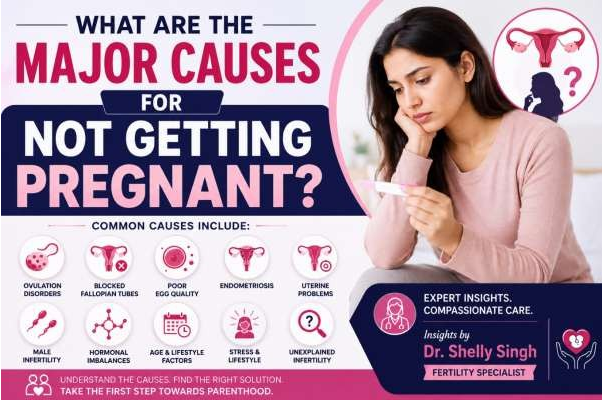
The major causes for not getting pregnant vary from person to person. In nearly one-third of infertility cases, female factors are responsible; one-third involve male factors, while the remaining cases involve both partners or unexplained infertility.
1. Ovulation Disorders
Ovulation disorders are among the most common fertility problems in women. Conditions affecting ovulation include:
- Polycystic Ovary Syndrome (PCOS)
- Thyroid disorders
- Elevated prolactin levels
- Premature ovarian insufficiency
- Hormonal imbalance
Symptoms
- Irregular menstrual cycles
- Missed periods
- Excess facial hair
- Acne
- Weight gain
2. Blocked Fallopian Tubes
The fallopian tubes carry the egg from the ovary to the uterus. If these tubes are blocked, fertilization cannot occur naturally.
Possible causes include the following:
- Pelvic inflammatory disease
- Endometriosis
- Previous abdominal surgery
- Tubal infections
Women with blocked tubes often experience no symptoms until fertility testing is performed.
3. Poor Egg Quality
Female fertility naturally declines with age, especially after 35 years. Poor egg quality may result from:
- Increasing maternal age
- Genetic factors
- Reduced ovarian reserve
- Certain medical treatments
As egg quality decreases, fertilization and embryo development become more challenging.
4. Endometriosis
Endometriosis occurs when tissue similar to the uterine lining grows outside the uterus. It may lead to:
- Pelvic inflammation
- Ovarian cysts
- Scar tissue
- Tubal blockage
- Reduced egg quality
Women with moderate to severe endometriosis often experience difficulty conceiving.
5. Uterine Problems
Certain uterine abnormalities can interfere with embryo implantation. These include:
- Uterine fibroids
- Endometrial polyps
- Congenital uterine abnormalities
- Intrauterine adhesions
Proper diagnosis through ultrasound or hysteroscopy helps determine appropriate treatment.
6. Male Infertility
Fertility is not solely a female concern. Male reproductive health contributes to approximately 40–50% of infertility cases.
Common male factors include:
- Low sperm count
- Poor sperm motility
- Abnormal sperm shape
- Varicocele
- Hormonal disorders
- Genetic conditions
A semen analysis is usually the first investigation performed for male partners.
7. Hormonal Imbalances
Hormones regulate every stage of reproduction. Hormonal conditions affecting fertility include:
- Thyroid disease
- Diabetes
- Insulin resistance
- Elevated prolactin
- Adrenal disorders
Correcting hormonal imbalance often improves fertility outcomes.
8. Age-Related Fertility Decline
Age remains one of the strongest fertility predictors. Women experience:
- Reduced egg quantity
- Lower egg quality
- Increased miscarriage risk
- Reduced IVF success rates
Men may also experience gradual declines in sperm quality with advancing age.
9. Lifestyle Factors
Several lifestyle habits may reduce fertility in both men and women. These include:
- Smoking
- Excess alcohol consumption
- Obesity
- Poor nutrition
- Lack of physical activity
- Chronic stress
- Inadequate sleep
Healthy lifestyle modifications may improve reproductive health.
10. Unexplained Infertility
Sometimes, all fertility investigations appear normal, yet pregnancy does not occur. This condition is known as unexplained infertility.
Although frustrating, many couples with unexplained infertility successfully conceive with appropriate fertility treatment.
Signs That You Should See a Fertility Specialist
Consult a fertility specialist if:
- You are below 35 years old and have been trying for over 12
- You are above 35 years old and have been trying for over 6
- Menstrual cycles are highly
- You have recurrent
- There is a known male fertility
- You have PCOS, endometriosis, or blocked
Early evaluation often leads to better treatment outcomes.
Fertility Tests That Help Identify the Cause
A comprehensive fertility evaluation may include:
For Women
- Hormonal blood tests
- AMH test
- Ultrasound scan
- Ovulation tracking
- HSG (tube patency test)
- Hysteroscopy if indicated
For Men
- Semen analysis
- Hormonal profile
- Ultrasound when required
Accurate diagnosis helps create a personalized treatment plan.
Treatment Options
Treatment depends entirely on the identified cause. Common options include:
Lifestyle Modification
Weight management, balanced nutrition, exercise, and stress reduction can improve fertility naturally.
Ovulation Induction
Medicines may help stimulate regular ovulation.
Intrauterine Insemination (IUI)
Suitable for selected couples with mild infertility.
In Vitro Fertilisation (IVF)
IVF offers excellent success rates for several fertility conditions, including tubal blockage, severe male infertility, and advanced maternal age.
Surgical Treatment
Certain uterine abnormalities, fibroids, or endometriosis may require minimally invasive surgery.
Can You Improve Your Chances Naturally?
Although not every fertility issue can be prevented, healthy habits support reproductive health.
Recommendations include:
- Maintain a healthy body
- Eat a nutrient-rich
- Avoid smoking and excessive
- Exercise
- Track ovulation
- Manage chronic medical
- Get adequate
- Seek medical advice early if pregnancy is
When Should You Avoid Delaying Treatment?
Many couples spend years trying home remedies before seeking medical advice.
Delaying evaluation may reduce treatment success, especially for women over 35 years of age. Early diagnosis allows more treatment options and often improves pregnancy outcomes.
Expert Care
Every fertility journey is unique. While many couples successfully conceive naturally, others may require timely medical evaluation and evidence-based fertility treatment.
Dr. Shelly Singh believes in a patient-centered approach, focusing on accurate diagnosis, transparent counseling, and personalized fertility care based on individual medical needs. A comprehensive fertility assessment can help identify the underlying cause and guide couples toward the most appropriate treatment plan.
Conclusion
The major causes for not getting pregnant range from ovulation disorders and hormonal imbalance to male infertility, uterine abnormalities, lifestyle factors, and age-related decline in fertility. Fortunately, advances in reproductive medicine allow many of these conditions to be diagnosed and treated effectively.
If you have been trying to conceive without success, seeking timely evaluation from an experienced fertility specialist can make a significant difference. Early diagnosis not only improves treatment outcomes but also provides reassurance and a clear path forward in your parenthood journey.
Frequently Asked Questions (FAQs)
1. What are the major causes for not getting pregnant?
The most common causes include ovulation disorders, PCOS, blocked fallopian tubes, endometriosis, poor egg quality, male infertility, hormonal imbalance, uterine abnormalities, age-related fertility decline, and unexplained infertility.
2. How long should I try before consulting a fertility specialist?
Women under 35 should seek evaluation after 12 months of trying, while women aged 35 or older should consider an assessment after 6 months.
3. Can stress alone prevent pregnancy?
Stress alone is rarely the sole cause of infertility, but chronic stress may indirectly affect hormonal balance, ovulation, and overall reproductive health.
4. Can male infertility be treated?
Yes. Depending on the underlying cause, treatment may include lifestyle modifications, medications, surgery, or assisted reproductive techniques such as IUI or IVF.
5. Is infertility always permanent?
No. Many fertility problems are treatable, and many couples successfully conceive with appropriate medical care.
6. Does age affect fertility?
Yes. Female fertility declines gradually after the age of 30 and more rapidly after 35 due to reduced egg quantity and quality.
7. Can lifestyle changes improve fertility?
Maintaining a healthy weight, eating a balanced diet, exercising regularly, avoiding tobacco and excessive alcohol, and managing chronic health conditions can support reproductive health and improve fertility in many individuals.