Intrauterine Contraceptive Devices (IUCD): Copper T vs Mirena – Which Birth Control Option Is Right for You?
When it comes to safe, long-term, and highly effective birth control methods, intrauterine contraceptive devices (IUCDs) are among the most trusted choices recommended by gynecologists worldwide. Women today are increasingly looking for non-surgical, reversible, and low-maintenance contraception options that fit their lifestyle and reproductive goals.
Among the most commonly used IUCDs are Copper T and Mirena. While both are inserted into the uterus to prevent pregnancy, they work differently and offer unique benefits.
If you are confused about choosing between Copper T and Mirena, this detailed guide by Dr. Shelly Singh will help you understand their differences, benefits, side effects, cost considerations, and which option may suit you best.
What Are Intrauterine Contraceptive Devices (IUCDs)?
An intrauterine contraceptive device (IUCD) is a small T-shaped device inserted into the uterus by a qualified gynecologist to prevent pregnancy. IUCDs are considered one of the most effective reversible contraception methods available today.
They are popular because they:
- Provide long-term pregnancy protection
- Are reversible and fertility returns after removal
- Require minimal maintenance
- Are highly effective (more than 99%)
- Are suitable for many women, including mothers after childbirth
IUCDs are mainly divided into two categories:
- Copper-based IUCDs (Copper T)
- Hormonal IUCDs (Mirena)
What Is Copper T?
Copper T is a non-hormonal intrauterine contraceptive device wrapped with copper wire. The copper creates an environment that prevents sperm from fertilizing the egg.
Copper T is widely preferred by women who:
- Want hormone-free birth control
- Need long-term contraception
- Are breastfeeding
- Want a cost-effective family planning option
How Copper T Works
Copper ions released from the device:
- Reduce sperm mobility
- Prevent sperm from reaching the egg
- Create changes in the uterus that reduce chances of implantatio
Duration of Copper T
Depending on the type, the copper T can provide protection for
- 5 years
- 10 years
Benefits of Copper T
- Hormone-free contraception
- Long-lasting protection
- Highly effective birth control
- Safe during breastfeeding
- Quick fertility return after removal
- Affordable contraceptive option
- Minimal ongoing maintenance
Possible Side Effects of Copper T
Some women may experience:
- Heavy periods
- Increased menstrual cramps
- Spotting between periods
- Mild discomfort after insertion
These symptoms usually improve within a few months.
What Is Mirena?
Mirena is a hormonal intrauterine system (IUS) that releases a small amount of levonorgestrel hormone into the uterus.
Unlike the Copper T, Mirena not only prevents pregnancy but can also help manage several gynecological conditions.
How Mirena Works
Mirena prevents pregnancy by
- Thickening cervical mucus
- Preventing sperm movement
- Thinning the uterine lining
- In some cases, suppressing ovulation
Duration of Mirena
Mirena typically provides contraception for:
- Up to 8 years
Benefits of Mirena
- Extremely effective birth control
- Lighter periods or no periods over time
- Reduced menstrual pain
- Helpful for women with heavy bleeding
- Can help manage endometriosis symptoms
- Convenient and low-maintenance
- Reversible fertility control
Possible Side Effects of Mirena
Some women may experience:
- Irregular spotting initially
- Hormonal side effects such as acne or mood changes
- Breast tenderness
- Headaches
- Ovarian cysts in some cases
Most side effects reduce within the first few months after insertion.
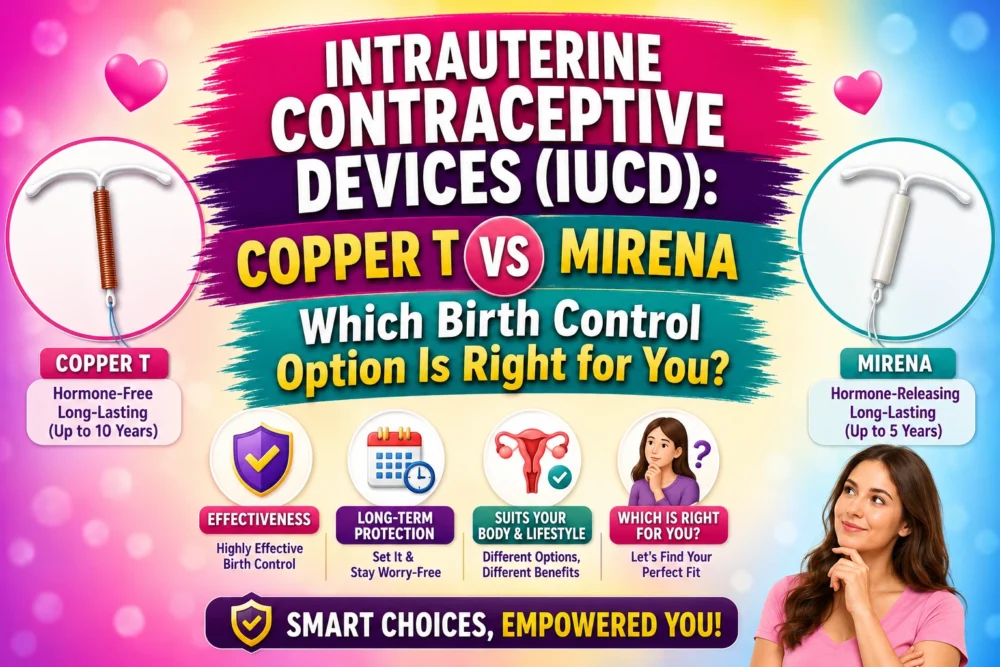
Copper T vs Mirena: Key Differences
| Feature | Copper T | Mirena |
|---|---|---|
| Type | Non-hormonal IUCD | Hormonal IUCD |
| Hormones | No | Yes |
| Duration | 5–10 years | Up to 8 years |
| Effect on Periods | May increase bleeding | Often reduces bleeding |
| Best For | Women wanting hormone-free contraception | Women with heavy periods or painful menstruation |
| Cost | More affordable | Higher initial cost |
| Breastfeeding Friendly | Yes | Usually yes under doctor guidance |
| Fertility After Removal | Returns quickly | Returns quickly |
Who Should Choose Copper T?
Copper T may be suitable if you:
- Prefer hormone-free birth control
- Want long-term contraception
- Have regular menstrual cycles
- Are looking for affordable contraception
- Need emergency contraception within 5 days of unprotected intercourse
Who Should Choose Mirena?
Mirena may be ideal if you:
- Have heavy menstrual bleeding
- Experience painful periods
- Want lighter or absent periods
- Need both contraception and therapeutic gynecological benefits
- Prefer a low-maintenance hormonal birth control option
Is IUCD Insertion Painful?
Most women experience only mild discomfort during insertion. The procedure is quick and usually completed within a few minutes in the clinic.
Some women may feel:
- Mild cramping
- Temporary dizziness
- Light spotting afterward
Experienced gynecologists like Dr. Shelly Singh ensure safe, comfortable, and hygienic insertion procedures with proper counseling before and after placement.
When Is the Best Time for IUCD Insertion?
An IUCD can be inserted
- During periods
- After childbirth
- After a cesarean section
- After abortion under medical supervision
The right timing depends on your health condition, menstrual cycle, and reproductive goals.
Are the Copper T and Mirena safe?
Yes, both Copper T and Mirena are considered safe and effective when inserted by a qualified gynecologist.
However, they may not be suitable for women with:
- Active pelvic infections
- Certain uterine abnormalities
- Unexplained vaginal bleeding
- Copper allergy (for the copper T)
- Hormone-sensitive conditions (for Mirena)
A proper gynecological consultation is important before choosing any contraceptive method.
How Effective Are IUCDs?
Both Copper T and Mirena are more than 99% effective in preventing pregnancy, making them among the most reliable contraceptive methods available.
Their effectiveness is comparable to permanent sterilization but with the advantage of reversibility.
Can Pregnancy Happen with a Copper T or Mirena?
Pregnancy with an IUCD is rare but possible in very uncommon cases.
You should immediately consult a gynecologist if you experience:
- Missed periods
- Severe abdominal pain
- Positive pregnancy test
- Unusual bleeding
Regular follow-up visits help ensure proper IUCD placement and function.
Recovery and Aftercare Following IUCD Insertion
After insertion, women are generally advised to:
- Avoid intercourse for 24–48 hours
- Monitor for unusual pain or fever
- Attend follow-up appointments
- Check for IUCD strings periodically if advised
Most women can resume normal activities the same day.
Why Choose Dr. Shelly Singh for IUCD Consultation and Insertion?
Choosing the right gynecologist is essential for safe and effective contraceptive care.
Dr. Shelly Singh is known for providing the following:
- Personalized family planning guidance
- Advanced gynecological care
- Safe Copper T and Mirena insertion
- Confidential consultations
- Compassionate women’s healthcare support
- Evidence-based treatment recommendations
Whether you are looking for long-term birth control, postpartum contraception, or treatment for heavy periods, expert evaluation can help you make the best decision.
Frequently Asked Questions (FAQs)
1. Which is better: Copper T or Mirena?
The best option depends on your medical history, menstrual pattern, and personal preferences. The Copper T is ideal for hormone-free contraception, while Mirena is beneficial for women with heavy or painful periods.
2.Can I get pregnant after removing the IUCD?
Yes. Fertility usually returns quickly after the removal of both the Copper T and Mirena.
3. Is Mirena good for heavy bleeding?
Yes. Mirena is commonly recommended for women with excessive menstrual bleeding.
4. How much does the Copper T or Mirena cost?
The cost varies depending on the clinic, brand, and consultation charges. Copper T is generally more affordable than Mirena.
5. Can IUCDs affect future fertility?
No. IUCDs are reversible contraceptive methods and do not permanently affect fertility.
Book Your IUCD Consultation with Dr. Shelly Singh
If you are considering Copper T insertion or Mirena insertion or need expert advice for the best contraception method, consult Dr. Shelly Singh for personalized women’s healthcare solutions.
Early consultation can help you choose a safe, comfortable, and effective birth control method tailored to your lifestyle and reproductive health goals.
Schedule Your Appointment Today
- Expert Gynecology Consultation
- Safe IUCD Insertion Procedures
- Personalized Contraception Planning
- Advanced Women’s Healthcare Support
Conclusion
Intrauterine contraceptive devices such as Copper T and Mirena are highly effective, safe, and convenient options for women seeking long-term contraception.
The right choice depends on your body, health condition, menstrual cycle, and future pregnancy plans. A proper consultation with an experienced gynecologist can help you make an informed and confident decision.
If you are exploring reliable birth control solutions or need expert women’s healthcare guidance, consult Dr. Shelly Singh for personalized and evidence-based gynecological care.